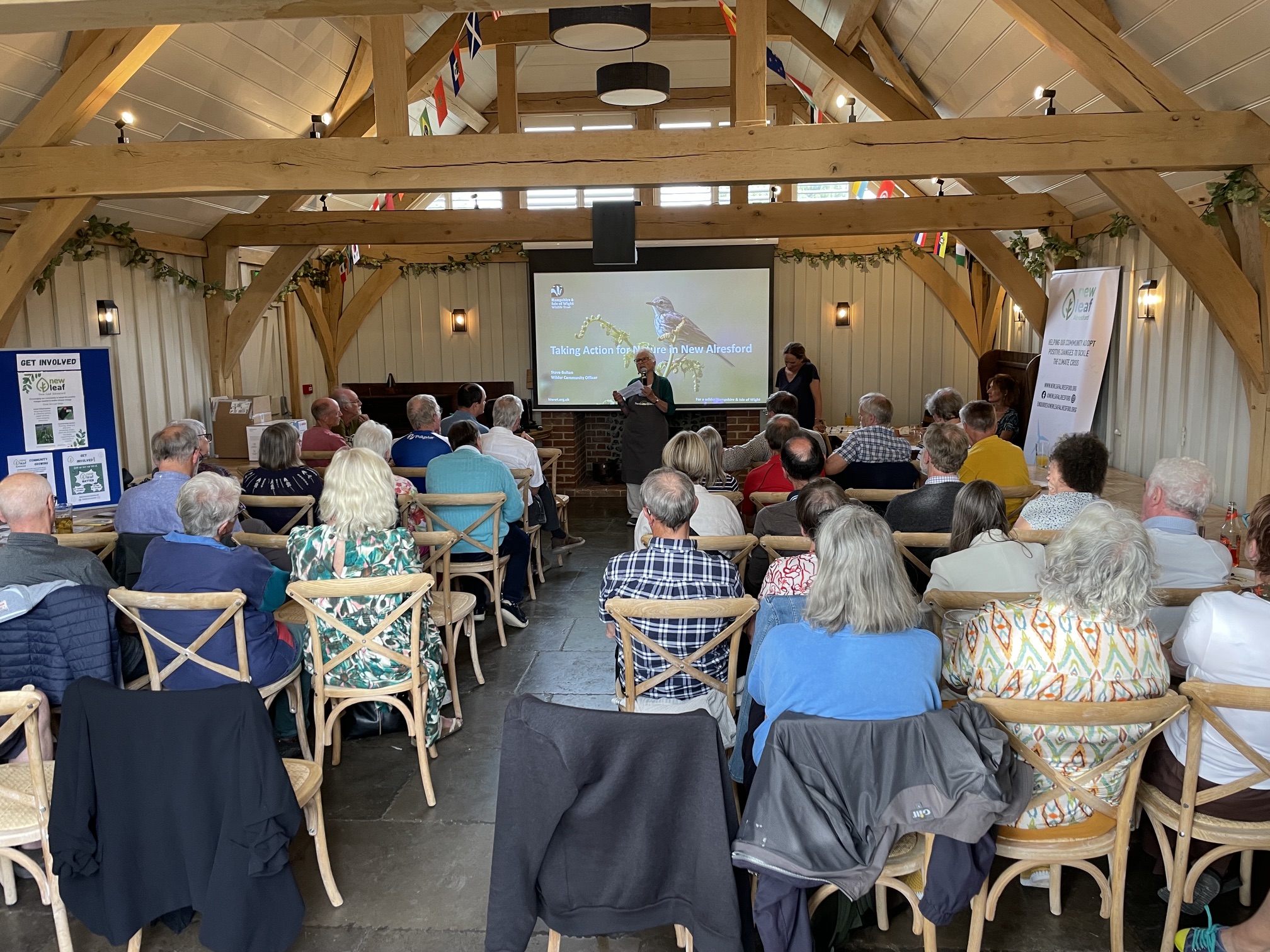
On Monday 15th June, we enjoyed a series of Earth, Air and Water talks in the Barn at The Flower Pots. The aim of the event was to highlight our local green spaces and habitats and consider what more we could all do to help support them.
Steve Bolton from Hampshire & Isle of Wight Wildlife Trust spoke first. He outlined the need for action to both support and, importantly, restore our natural spaces, pointing to dramatic declines in wildlife species and habitats. He also demonstrated the need for connected action across landscapes, which can be measured by mapping nature recovery projects and pollinator corridors. The Trust’s Team Wilder offers support to individuals and groups to take action for nature, from wildlife friendly gardening to larger biodiversity initiatives.
Steve turned his attention to Alresford’s green spaces and gave us some ideas on how they might be better managed to support nature. He suggested that we might consider a flowering lawn approach on the Avenue, with added wildflower planting and shrubs to support a wider range of wildlife. Areas of Arlebury Park could be better managed for pollinators, with the addition of log piles and nesting boxes supporting our bugs, bats and birds. He identified opportunities for similar changes in management on Stratton Bates, where disease resistant elms could also be planted to replace those that have died. Sun Hill Recreation Ground would benefit from meadow creation in one corner, perhaps, and flowering shrubs to support wildlife. More could also be achieved on Benenden Green, at our allotments and on our roadside verges.
Steve pointed to the Local Nature Recovery Strategy for Hampshire, which sets out priorities for achieving the best outcomes for nature recovery across the county. Alresford sits within the central chalk belt, meaning that our priority spaces are chalk grasslands, chalk streams, fen meadows and ancient woodlands, with a huge part to be played by landowners, managers, riparian owners, and farmers. The layered Local Habitat Map can help identify protected sites and habitat opportunity areas.
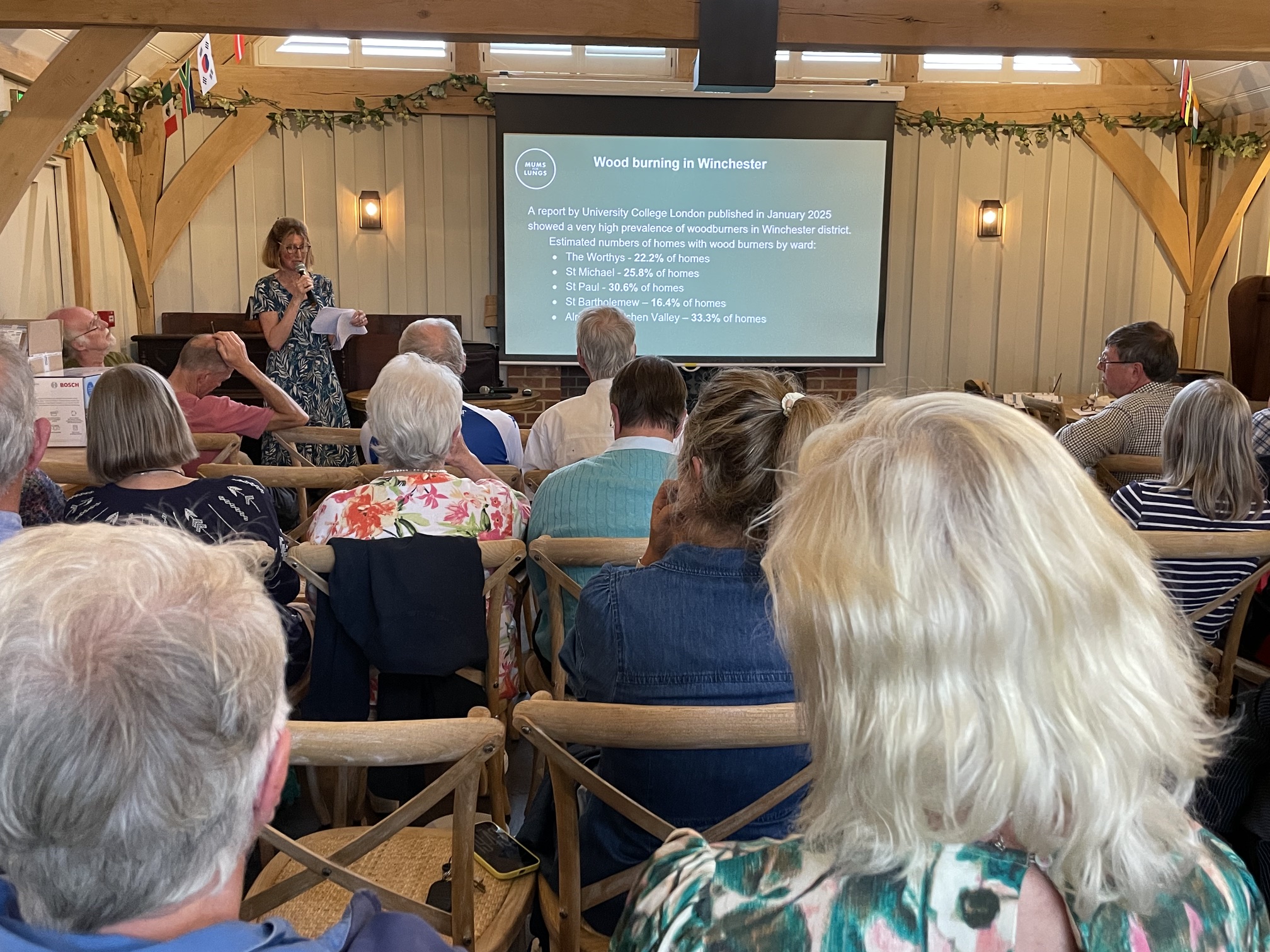
Next, we heard from Hazel Agombar from the air quality charity Mums For Lungs, which campaigns for better policies, offers advice on how we can all protect ourselves from air pollution, and importantly points to how we can reduce our own impact on air quality. We learnt that air pollution is the biggest environmental risk to health in the UK.
There are two main pollutants in our urban areas: nitrogen dioxide, which largely comes from transport, and particulate matter, which comes from transport in the form of brake dust and tyre wear, but also from wood burning. Volatile organic compounds in our cleaning products, cosmetic products, paints and furnishings are also very dangerous, as are the biological airborne particles mould, dander and pollen.
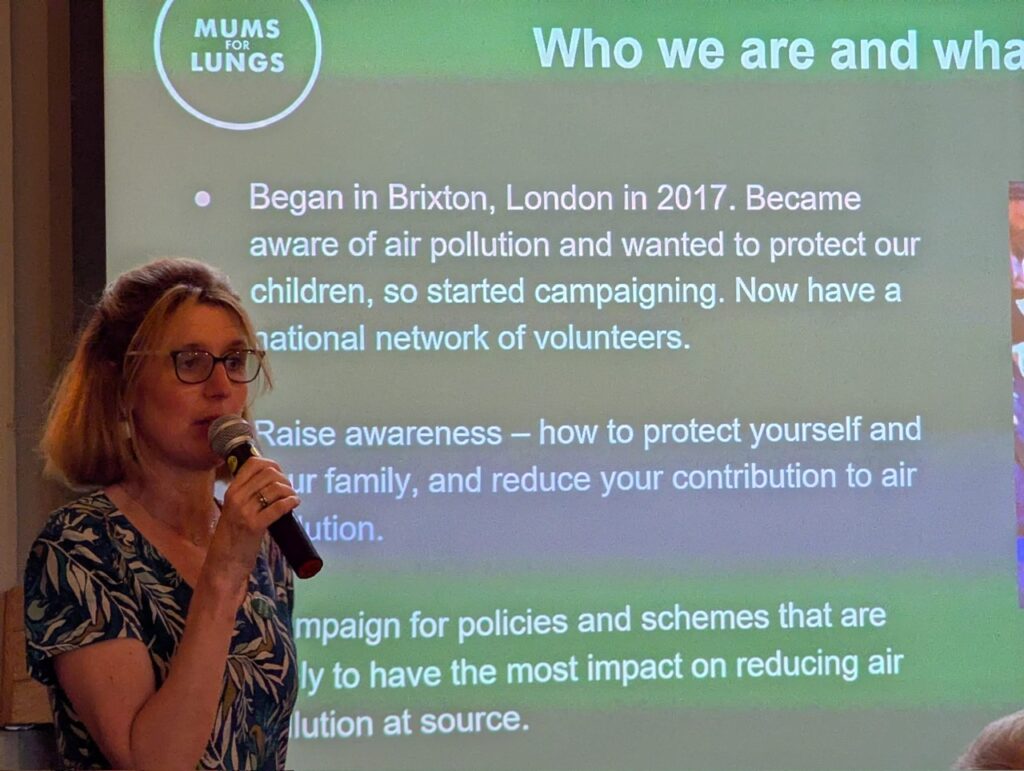
Hazel told us that air pollution contributes to 40,000 premature deaths a year in the UK and increases the risk of a huge range of serious health conditions. In children, air pollution can damage their bodies and stunt lung development. The top two sources of air pollution in the UK are transport and, incredibly, domestic wood burning.
Nitrogen dioxide levels were so high in Winchester City Centre in 2003, DEFRA imposed an Air Quality Management Area (AQMA), where levels are regularly monitored and recorded, and WCC were required to produce an Air Quality Action Plan. Following improvements where the area ‘met the required standards’ for levels of nitrogen dioxide for three years running, the AQMA was lifted in 2025. The Council now also has an Air Quality Strategy.
A growing source of air pollution in the UK is particulate matter, and unfortunately, we seem to have something of a wood burning addiction here in Alresford! A study by UCL published in January 2025 showed a very high prevalence of woodburners in the Winchester district, with 33.3% of homes in the Alresford and Itchen Valley ward featuring one. Domestic solid fuel burning contributes to almost 2,500 deaths a year in the UK, and stopping unnecessary burning would save our NHS more than £54m annually. Incredibly, for the same amount of heat generated, wood releases more CO2 than either oil or gas.
If we think about it, burning wood makes very little sense in the context of the climate crisis. Trees work hard all their living lives to capture carbon from the atmosphere, all of which is released once again when the dead wood is burnt. Bonfires were raised as an issue, and in particular Bonfire Night!
In terms of protecting ourselves, apart from avoiding wood burning, we should walk and cycle wherever we can, choosing low traffic greener routes away from main roads. When you do drive, avoid idling your engine. In just one minute, a single idling car produces enough exhaust to fill up to 150 balloons with harmful chemicals, including particulate matter, nitrogen oxides, and carbon dioxide. It is also 60% more harmful to those at exhaust pipe level, which includes children and people with mobility issues in scooters and wheelchairs, all of whom are already likely to be more vulnerable in the first place. Many people do not know that under UK law, it is in fact an offence to leave your engine idling unnecessarily while parked on a public road – for these very reasons.
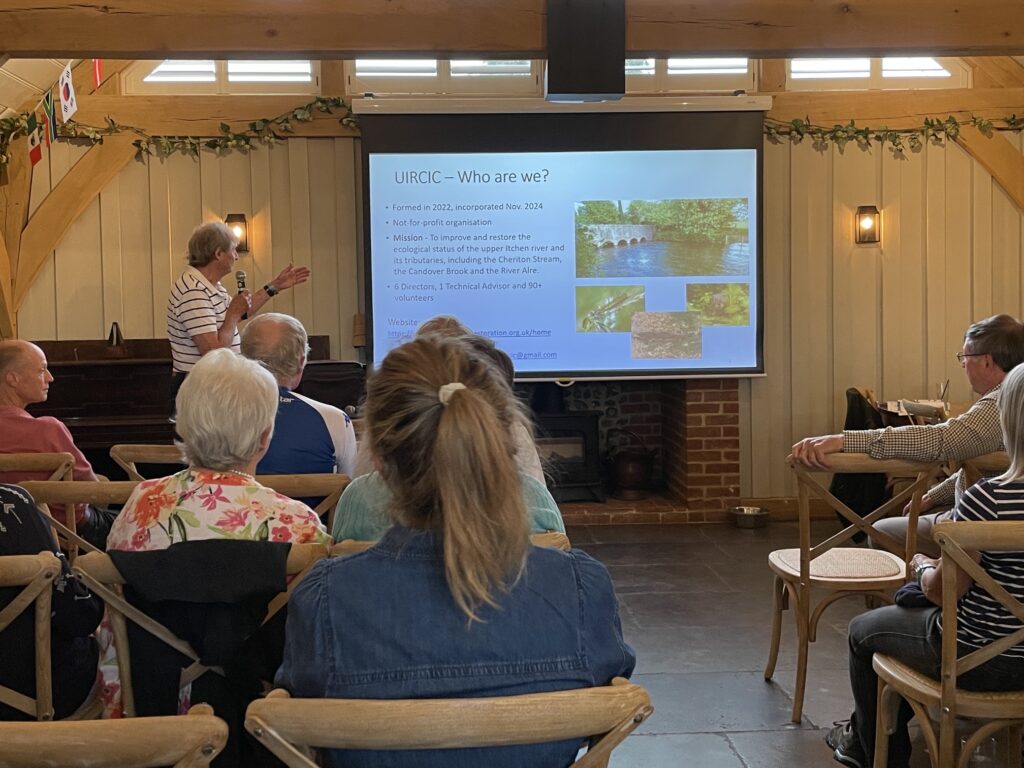
Lastly, we heard from a team of four speakers from Upper Itchen Restoration Community Interest Company, which was formed in 2022 to improve and restore the ecological status of the Upper Itchen river and its tributaries. The main areas of focus are abstraction, farming, human wastewater, habitat change, urban drainage and highways runoff, recreation, policy and behaviour. The group has three key focus points: water quantity, water quality, and habitat. Alresford is a water scarce area, with less water per person than parts of North Africa. With changes in our climate, we are also facing higher instances of drought conditions – which all means that we need to use less water.
The group’s recent ‘Clear But Not Clean’ campaign focuses on the household cleaning products we use, and how we can all make a meaningful difference for our chalk streams depending on what we choose to put down our drains.
University aided studies have shown that many river toxic chemicals are ending up in our chalk streams where they are building up and causing harmful pollution. Many of these chemicals, which do not break down easily in the environment, are not fully removed by standard wastewater treatment and so their continued use causes this build up, or “pseudo-persistence”, resulting in harm to the rare and precious ecosystem. These chemicals can also enter streams from septic tank discharge.
Regular volunteer testing reports higher chemical levels than is healthy for a chalk stream and a decline in river fly numbers, which are important for the food chain. Both of these factors indicate water pollution, endangering fish, river animals and plants as a result. Upper Itchen Restoration monitors water quality on a monthly basis at 11 sites.
With the University of Brighton they are also sampling for micro-particulates in the Upper Itchen. These have been found to be widespread, in particular micro-plastics and micro-fibres. Using less plastic, particularly single-use packaging, is the best place to start to make a difference. Many of the micro-fibres enter rivers from our washing machines, so you can look at using a laundry bag or external filter system to capture these particulates before they enter our waterways.
In terms of habitat, Upper Itchen Restoration are monitoring river fly numbers, invasive non-native species, and important native species too. The group help with local restoration projects, which at this time includes an exciting initiative at West Lea Farm Shop, where a wetland is being created from what was once watercress beds. 6,000 plants have been introduced there already, with a further 6,000 to be added – please let the group know if you would like to help! They are also working with landowners to map the Upper Itchen, and partner with several other local groups to take action on our chalk streams.
Lastly, we heard about an exciting national and international movement to establish legal recognition for Rights of Nature, and specifically Rights of Rivers. This would mean that Nature could be considered as a ‘legal entity’, and represented in courts as such. This would require production of a charter, and establishment of a guardian, to voice advocacy at council meetings and in court proceedings. Rights of Rivers have now been declared in 12 UK councils, and you can support the campaign too.
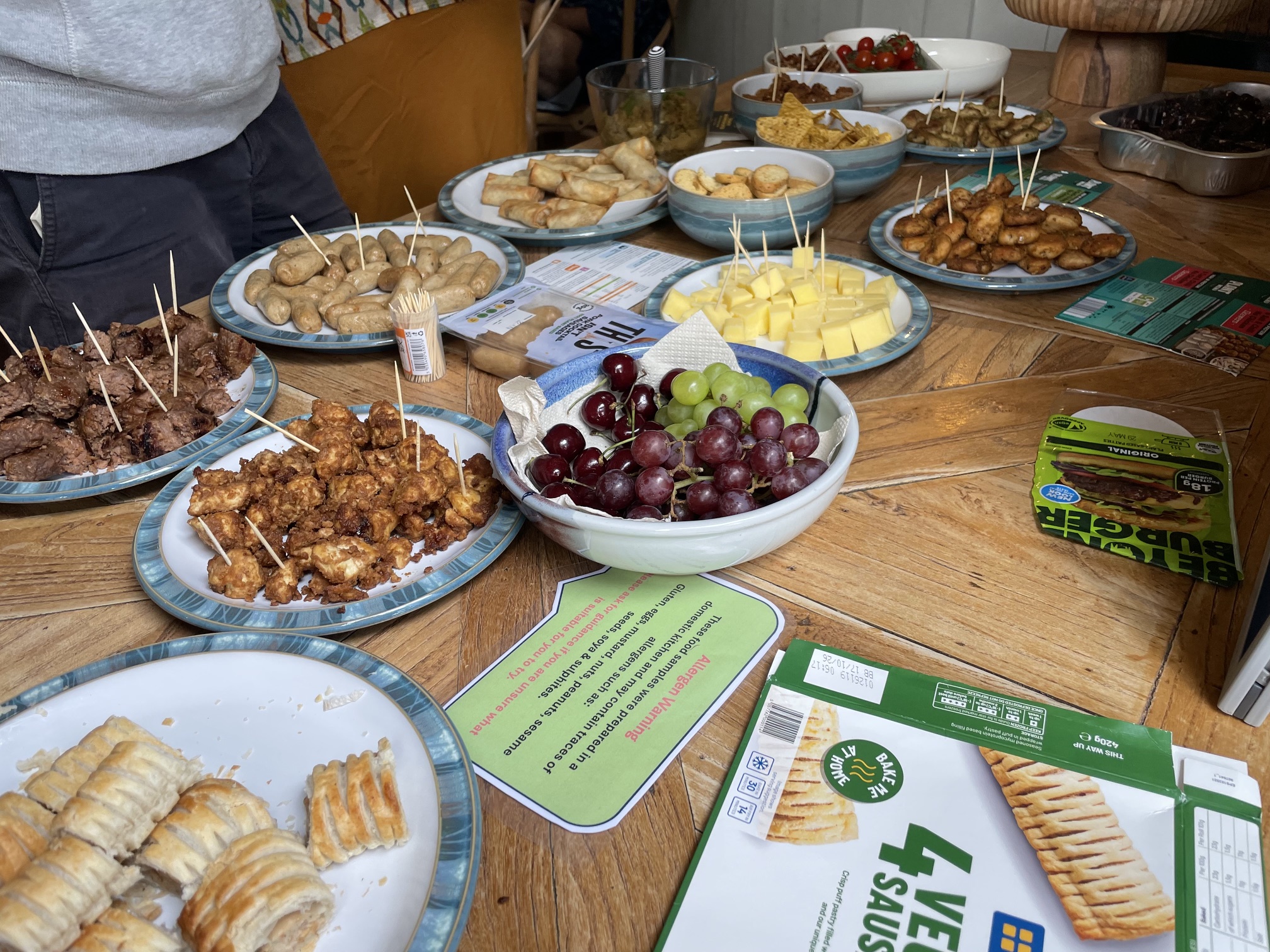
New Leaf would like to thank all six fantastic speakers for offering us their time, and of course everyone who attended. We hope you all enjoyed the event, and the array of plant-based food from Sustainabites, and that you were inspired to take action for nature and climate.
Please find useful links, plus a list of actions you can take now, from each group, below:
Hants & IOW Wildlife Trust suggest we:
Create Pollinator Corridors and Hedgehog Highways
Support wildlife in our gardens or outside spaces
Look at the Local Nature Recovery Strategy for optimal opportunities
Host or join community nature walks, events and citizen science opportunities – for example the Moth ID event on Thursday 16th July on The Avenue! Meet 10am at the entrance to Arlebury Park car park
Reach out to Team Wilder for support and advice
Mums for Lungs suggest we:
Avoid burning stuff!
Walk, cycle, and use public transport, choosing greener routes where possible
Never idle our engines
Service boilers regularly
Switch to electric cooking and ventilate our homes
Choose greener products
Allow new furniture and flooring to “off-gas”
Find out more at Mums For Lungs and the Clean Air Hub
Upper Itchen Restoration suggest we:
Conserve water
Choose river friendly household cleaning products
Reduce single-use plastic
Filter wastewater
Support the Rights of Rivers campaign and check out the River Rights Network
Join in with their monitoring and restoration activities
Find much more information, including which products to avoid, on their website