
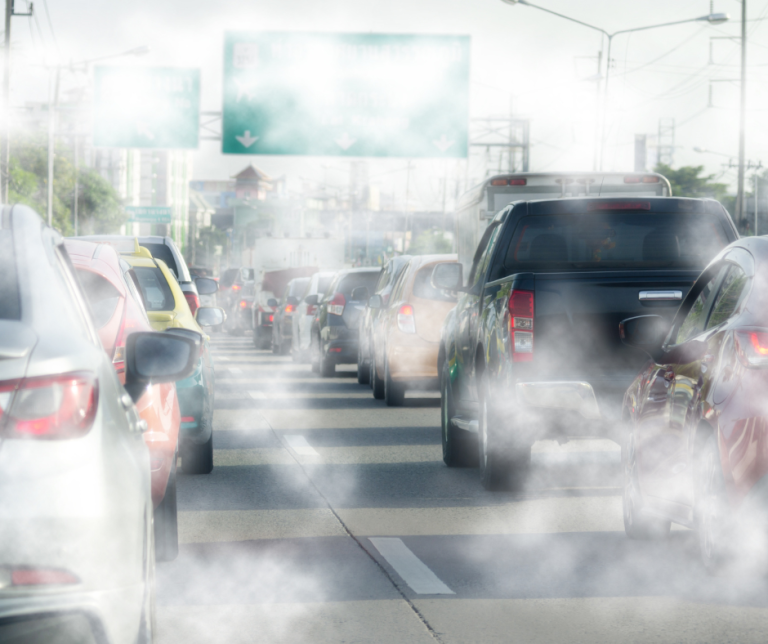
Poor air quality is the largest environmental risk to public health, and the UK has the highest rates of childhood asthma in Europe. There are two main pollutants in our urban areas: nitrogen dioxide, which largely comes from transport, and particulate matter (tiny particles of solids or liquids suspended in the air), which comes from transport in the form of brake dust and tyre wear, and from wood burning.
Most of this pollution is invisible and that can make it more dangerous. Babies in prams and young children may breathe up to 60% more polluted air because they inhale more than adults in proportion to their body weight, breathe closer to ground-level sources of air pollution such as vehicle exhausts, and are less able to control their exposure. This can damage their bodies and stunt lung development.
Polluting particles don’t just stay in the lungs. The smallest can pass into the bloodstream, hitch a ride on red blood cells and travel around the body, triggering inflammation and damaging organs along the way. They’ve now been found in almost every organ of the human body – which is why particulate matter is classed as a Group 1 carcinogen and considered the air pollutant most harmful to human health.
As we head into winter, drivers are tempted to keep engines running to stay warm (although increasingly this is happening in hot weather too, to keep cool).
Some things worth knowing:
When you start a car, the fastest way to warm the cabin is to drive away gently after 30 seconds. This warms up the engine faster than idling, delivering hot air to the cabin much sooner.
If you stop, turn the engine off but leave the electronics turned on. The vehicle’s heating core will continue to blow warm air for up to 30 minutes, using residual engine heat.
Idling for just 10 seconds wastes more fuel than restarting the vehicle. Modern electronic ignitions and batteries are designed to handle frequent stop-starts without excessive wear.
An idling engine can produce up to twice as many exhaust fumes as an engine in motion. In just one minute, a single idling car produces enough exhaust to fill up to 150 balloons with harmful chemicals, including particulate matter, nitrogen oxides, and carbon dioxide.
Toxic exhaust fumes contribute to many health conditions, including asthma, lung disease, cancer, dementia, stroke, heart problems, and more.
Many people do not know that under UK law it is in fact an offense (Section 42 of the Road Traffic Act 1988) to leave your engine idling unnecessarily while parked on a public road – and drivers can be fined for doing this.
Our tips for breathing cleaner air:
Walk, cycle or even scoot whenever you can! Pedestrians and cyclists breathe cleaner air than those who travel by car on the same route. Outside, the air is cleaner because fumes disperse more easily. Inside the car, fumes from vehicles in front are drawn in and can’t escape.
Choose a greener walking route. Look for a route with lower traffic or pavements set back from the road.
Step back when waiting at a crossing. Particularly when waiting with children
Switch off your engine whenever it is safe to do so.
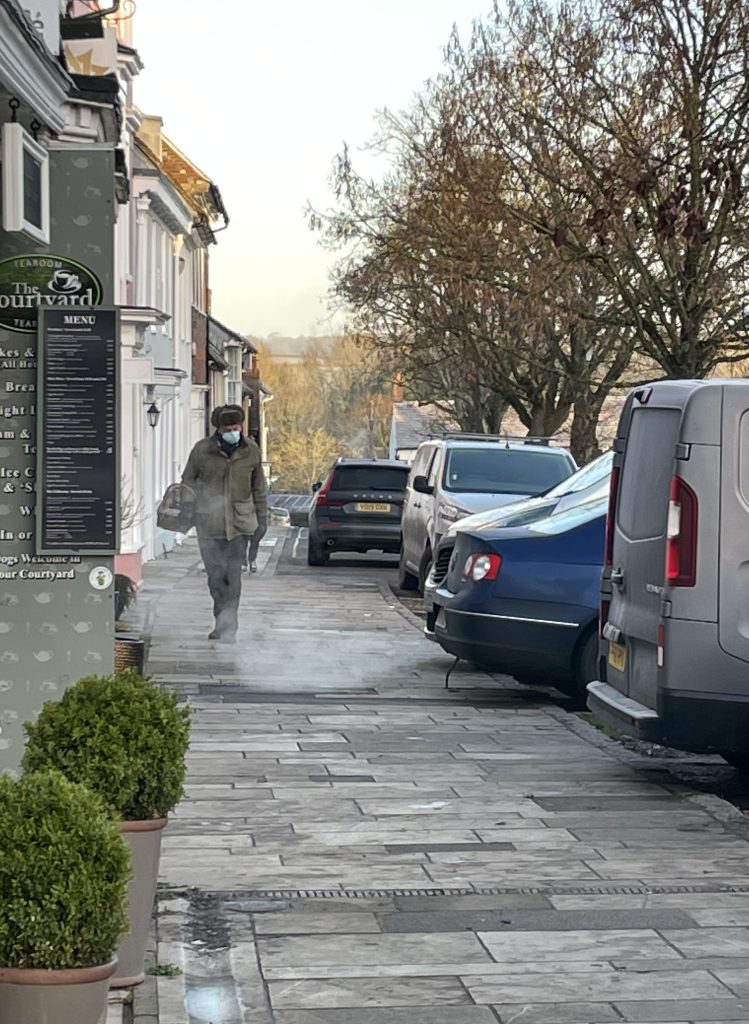
Find more tips on improving both outdoor and indoor air quality on our website here, and find out more from the charity Mums For Lungs.